Why Islanded Grids Are Pioneering High-Renewable Energy Systems
Islanded and semi-islanded power grids, which operate independently or with limited connection to larger networks, are becoming living laboratories for the future of energy. These systems cannot rely on traditional fossil fuel backups and must embrace self-sufficiency. As a result, they are leading the way in integrating high shares of renewables, energy storage, and advanced controls. The following Q&A explores how these unique grids are transforming into test beds for a cleaner, more resilient energy system.
1. What Are Islanded and Semi-Islanded Grids?
Islanded grids are electrical power systems that operate independently from a main utility network, often serving remote communities, islands, or industrial sites. Semi-islanded grids have limited interconnection with a larger grid but can function autonomously during emergencies or when the connection is unavailable. Both types face unique challenges because they cannot rely on a massive external grid for balancing supply and demand. Instead, they must manage their own generation, storage, and consumption. This self-reliance forces them to innovate, making them ideal testing grounds for high-penetration renewable energy systems. Unlike large interconnected grids that can call upon distant fossil fuel plants, islanded grids must plan for complete energy independence, often turning to solar, wind, batteries, and demand response to maintain stability.

2. Why Must Islanded Grids Plan for Independence from Fossil Fuels?
Traditional power systems have long depended on fossil-fueled plants to ramp up or down as needed. Islanded grids, however, cannot assume that a distant coal or gas plant will always be available to rescue them during fluctuations. Transporting fuel to remote locations is costly and logistically challenging, while pipelines or shipping routes may be disrupted by weather or geopolitical events. Moreover, many island communities are seeking to reduce their carbon footprint and protect fragile ecosystems. As a result, these grids are compelled to develop self-sufficient systems that rely on local renewable resources like sun and wind. This independence not only enhances energy security but also reduces exposure to volatile fuel prices. By necessity, islanded grids become pioneers in deploying high shares of renewables, energy storage, and flexible demand management.
3. How Do Islanded Grids Serve as Test Beds for High-Penetration Renewables?
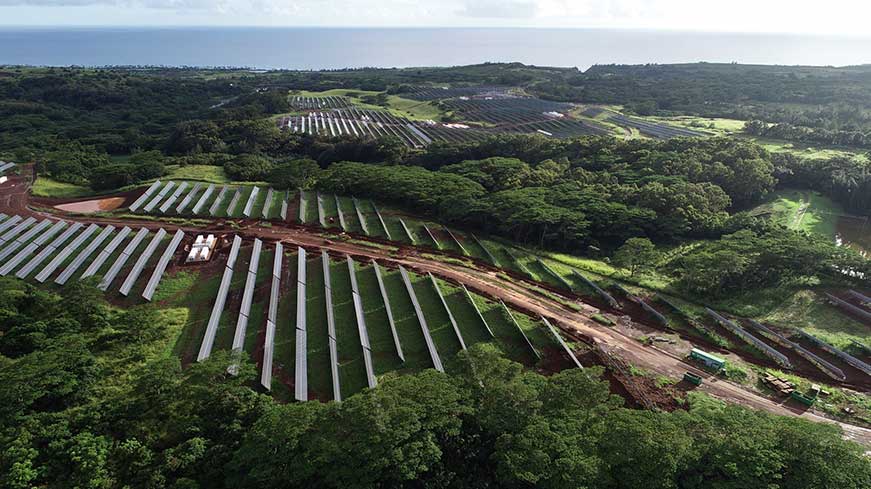
Because islanded grids cannot fall back on a large interconnected network, they must integrate very high levels of variable renewable energy—often exceeding 50% or even 100% at times. This creates a real-world laboratory for managing the technical challenges of high-penetration renewables, such as grid stability, voltage control, and frequency regulation. Engineers and operators test advanced inverter technologies, virtual power plants, and smart inverters that can respond in milliseconds to changes in supply or demand. The lessons learned from these constrained systems are invaluable for mainland grids that aim to increase their renewable share. For instance, the Hawaiian island of Kauai has achieved over 70% solar penetration using a mix of solar farms, battery storage, and predictive controls, demonstrating that high renewables are feasible even in isolated settings.
4. What Role Does Energy Storage Play in Islanded Grid Systems?
Energy storage is critical for islanded grids because it compensates for the intermittency of solar and wind power. Batteries, pumped hydro, and other storage technologies store excess energy generated during sunny or windy periods and release it when generation drops or demand spikes. This capability enables grids to maintain a stable frequency and voltage without relying on fossil-fuel backup. In many island systems, storage is deployed alongside advanced predictive controls to forecast generation and load, ensuring that stored energy is used efficiently. For example, the island of Ta'u in American Samoa uses a solar-plus-battery microgrid to meet nearly 100% of its electricity needs, eliminating diesel generators. Storage also supports grid functions like black start capability, allowing the grid to restart after an outage without external power.
5. How Are Advanced Controls Used in Islanded Grids?
Advanced controls are the brain behind modern islanded grids. These systems employ sophisticated software that monitors real-time data from solar panels, wind turbines, batteries, loads, and grid sensors. Using algorithms and machine learning, they predict generation and consumption patterns, optimize the dispatch of stored energy, and manage flexible demand resources like electric water heaters or smart appliances. In semi-islanded grids, advanced controls can also decide when to seamlessly connect or disconnect from the main grid based on economic or reliability factors. Such controls enable high renewable penetration without compromising stability. For instance, the Badger Island grid testbed in Scotland uses a real-time control system to balance wind, solar, and hydro generation with battery storage and demand-side response, achieving 100% renewable operation for extended periods.
6. What Challenges Do Islanded Grids Face in Adopting Renewables?
While islanded grids are innovative, they face significant hurdles. Limited geographical area can restrict the availability of renewable resources—for example, a small island may not have enough space for large solar farms or wind turbines. The high upfront cost of batteries and advanced controls can be a barrier, especially for communities with limited budgets. Technical challenges include managing inertia and frequency stability without large spinning generators, although modern inverters and batteries can help provide synthetic inertia. Additionally, islanded grids often lack the skilled workforce needed to operate and maintain advanced systems. Weather dependence poses risks during prolonged cloudy or calm periods, requiring adequate storage and demand flexibility. Finally, regulatory frameworks may not yet be designed for island-style grids, slowing adoption. Despite these challenges, innovative projects worldwide continue to demonstrate that with careful planning and technology, high-renewable islanded grids are viable.
7. What Lessons Can Mainland Grids Learn from Islanded Grid Experiments?
Mainland grids can gain vital insights from islanded grids' experiences with high-renewable penetration. First, the success of island test beds proves that variable renewables can reliably meet a large share of electricity demand when paired with storage and smart controls. Second, island grids demonstrate the importance of holistic system design—integrating generation, storage, demand response, and grid management from the start. Third, they highlight the need for advanced forecasting and real-time control to handle rapid changes in supply and demand. Finally, island projects show that community engagement and supportive policies accelerate adoption. As mainland grids aim for higher renewable targets, they can adopt the technical standards, control algorithms, and operational practices refined in islanded systems. For example, Hawaii's experience with solar-plus-storage microgrids has informed utility planning in California and Australia. These test beds are essentially proving grounds for the global energy transition.
Related Articles
- Creating Your First WebAssembly App: A Browser-Only Guide Using Emscripten and GitHub Codespaces
- Why One Samsung App Made Me Ditch Gesture Navigation
- Revolutionary Super Steel: Transforming Green Hydrogen Production from Seawater
- SpaceX's 34th Resupply Mission Delivers Cutting-Edge Science to the International Space Station
- Watermelon Eaters Show Markedly Better Diet Quality, New Research Finds
- How to Observe and Appreciate the May Flower Micromoon: A Step-by-Step Guide
- How to Audit Your MCP Deployments for the STDIO Command Execution Vulnerability
- Quadsqueezing Quantum Breakthrough: 6 Things You Need to Know