NASA’s Roman Telescope to Unmask Hidden Neutron Stars Across the Galaxy
Breaking: Roman Telescope Set to Reveal Invisible Neutron Stars
NASA's upcoming Nancy Grace Roman Space Telescope is poised to revolutionize the search for elusive neutron stars, which have long remained hidden from astronomers. Using a technique called astrometric microlensing, the telescope could identify and measure the mass of dozens of isolated neutron stars scattered across the Milky Way.
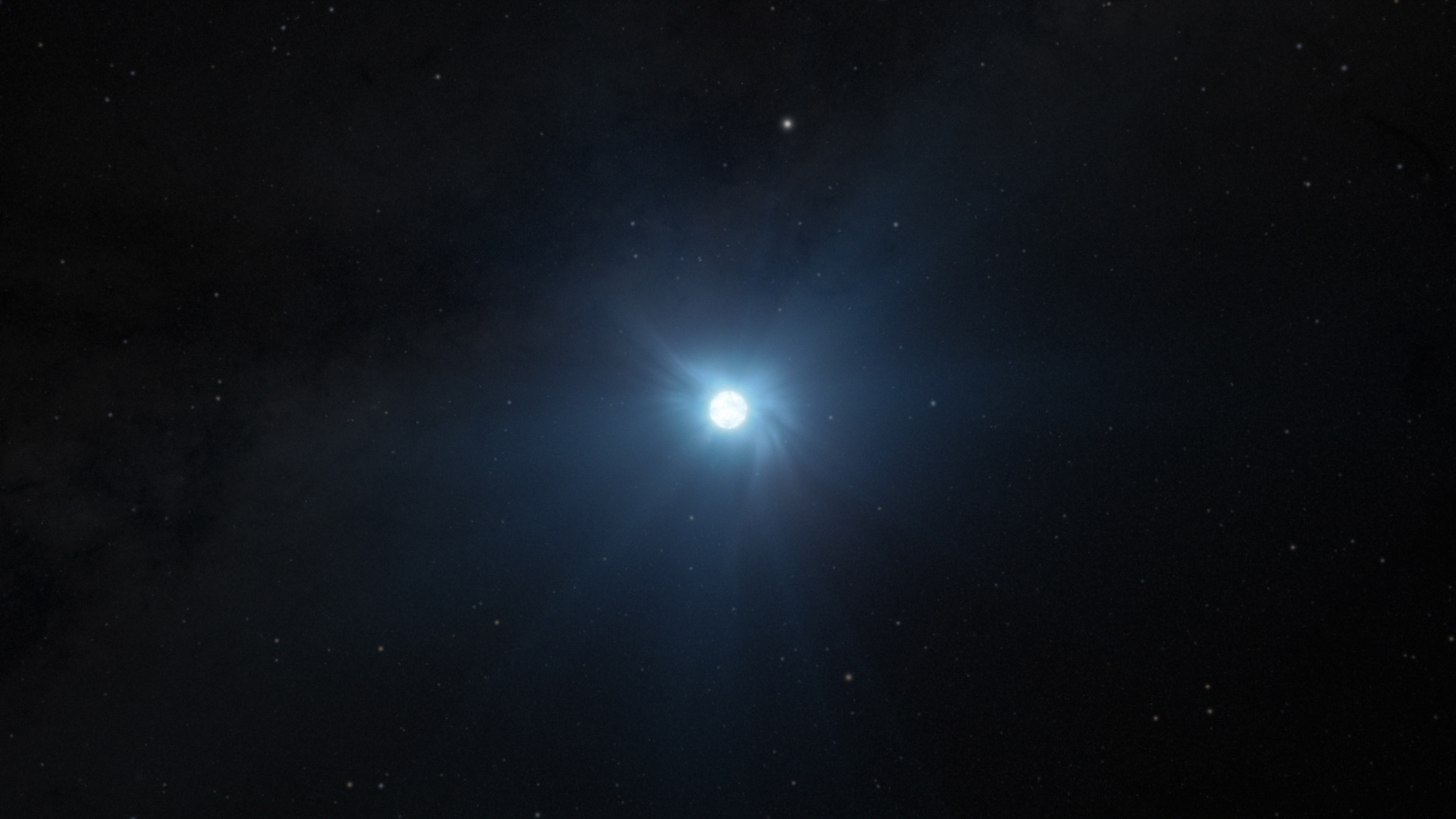
'Most neutron stars are relatively dim and on their own—incredibly hard to spot without some sort of help,' said Dr. Zofia Kaczmarek of Heidelberg University, lead author of a new study in Astronomy & Astrophysics. The research used detailed simulations of the galaxy and Roman’s future observations to demonstrate the telescope's potential.
The Challenge of Finding Neutron Stars
Neutron stars are ultra-dense remnants left after massive stars explode, packing more mass than the Sun into a city-sized sphere. They are key to understanding stellar evolution, heavy element distribution, and extreme physics. Yet unless they pulse in radio or X-ray wavelengths, they remain invisible to most telescopes.
Roman will hunt them not by their own light, but by their gravitational pull. When a neutron star passes in front of a distant background star, its gravity warps spacetime, bending the background star's light. This causes a temporary brightening and a tiny shift in the star’s apparent position.
The telescope will measure both the brightening (photometry) and the positional shift (astrometry) with unprecedented precision. ‘The size of the shift tells us the mass of the foreground object—a direct way to weigh otherwise invisible neutron stars,’ explained Kaczmarek.
Background: The Invisible Majority
Hundreds of millions of neutron stars are thought to exist in the Milky Way, but only a few thousand have been detected. Most are dark, cold, and isolated, emitting no detectable radiation. Roman’s astrometric microlensing technique offers a new window into this hidden population.
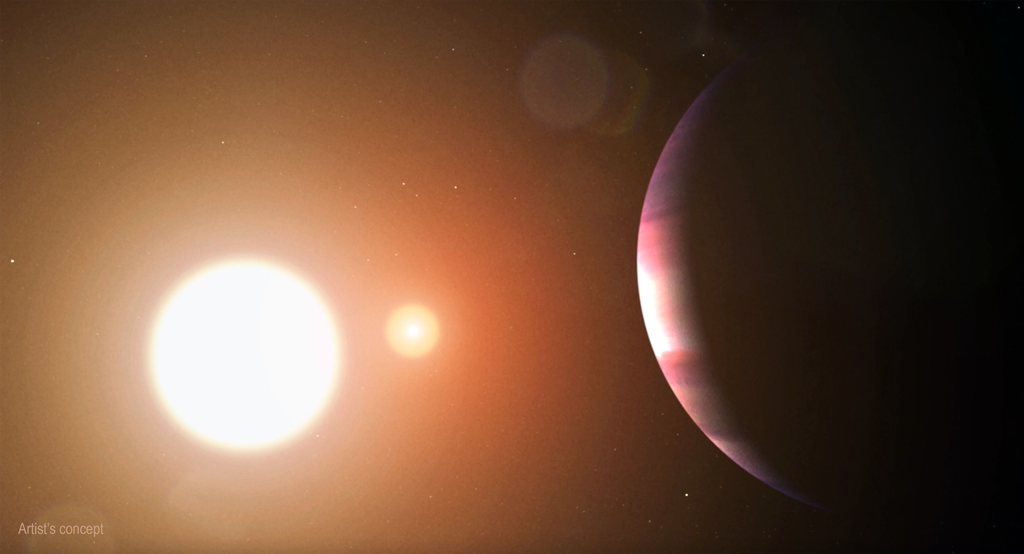
Previous surveys could detect the brightening but lacked the astrometric precision to measure mass. Roman’s instruments will track the tiny elliptical motion of the lensed star over weeks, providing direct mass estimates for neutron stars that would otherwise remain unknown.
What This Means for Astronomy
If successful, Roman’s observations could double the known sample of isolated neutron stars and provide the first direct mass measurements for many. This would help constrain models of neutron star formation, nuclear physics, and supernova mechanisms.
- Direct mass measurements – Breakthrough in understanding neutron star structure.
- Test general relativity – Microlensing events offer natural laboratories for gravity.
- Map galactic population – Reveal how neutron stars are distributed across the Milky Way.
‘Roman will transform our ability to study the most extreme objects in the universe,’ said Dr. Kaczmarek. The telescope is scheduled to launch by May 2027, and the first microlensing results could come within its first year of operations.
For more details, read the full study in Astronomy & Astrophysics.
Related Articles
- How to Observe Wave-Like Behavior in Antimatter Atoms: A Step-by-Step Guide for Researchers
- Discovering Beaver Island: A Comprehensive Guide to America's Emerald Isle
- Consciousness May Be Universe's Deepest Layer, New Theory Proposes
- Your Comprehensive Guide to NASA's 34th SpaceX Resupply Mission to the International Space Station
- How to De-Anonymize Google's Search Data in Under Two Hours: A Red Team's Approach
- AI Vision Breakthrough: New Video World Models Achieve Long-Term Memory with State-Space Architecture
- How to Navigate the Evolving Artemis III Mission Plan: A Step-by-Step Guide
- Revolutionizing Space Computing: NASA's Next-Generation Processor for Deep Space Missions