Autonomous AI EDR Neutralizes CPU-Z Watering Hole Attack: SentinelOne's Proactive Defense
Overview of the Incident
On April 9, 2026, the official website of CPUID (cpuid.com)—a trusted source for system monitoring tools like CPU-Z, HWMonitor, and PerfMonitor—became a vector for malware distribution. Attackers compromised the domain at the API level, intercepting legitimate download requests and redirecting them to attacker-controlled servers. For approximately 19 hours, users who visited the official site and clicked the download button received a properly signed binary bundled with a malicious payload. The trust chain, which relied on the vendor's own infrastructure, was weaponized.

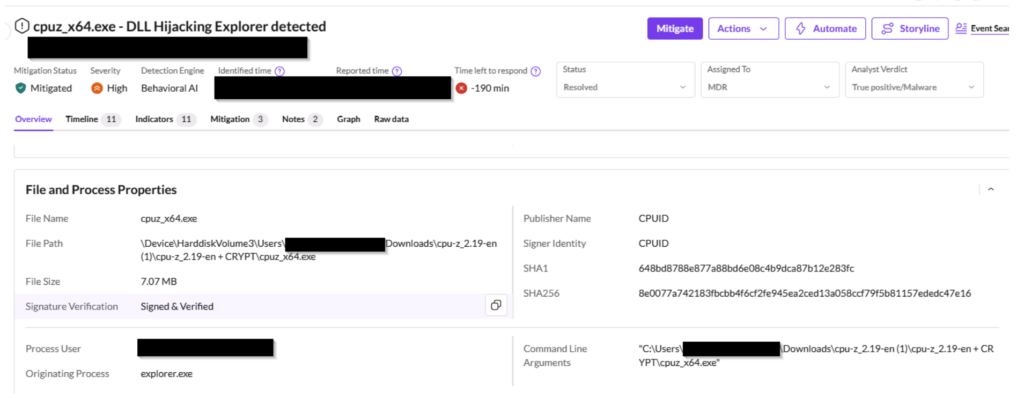
SentinelOne's behavioral detection engine flagged an anomaly in the first seconds of execution. The binary cpuz_x64.exe was genuine, digitally signed, and delivered from the vendor's own systems. However, the process chain that followed betrayed the attack: cpuz_x64.exe spawned PowerShell, which launched csc.exe (C# compiler), which in turn invoked cvtres.exe. CPU-Z performs no such operations. The agent autonomously terminated and quarantined the processes before the attack could advance.
How the Attack Worked
API-Level Compromise
The threat actors targeted the API layer of the CPUID domain, enabling them to silently modify the download flow. When a user requested the CPU-Z installer from the official site, the API redirected the request to a malicious server. The delivered binary retained the vendor's digital signature but carried a hidden payload.
Payload Delivery and Evasion
The malicious binary was designed to appear legitimate. The digital signature was valid, the file hash matched the expected value, and the download originated from the trusted infrastructure. However, upon execution, the payload unpacked itself through reflective code loading and process injection, avoiding disk-based artifacts. SentinelOne's agent detected five converging behavioral indicators:
- Anomalous API resolution: The process located system functions via nonstandard methods, bypassing the OS loader.
- Reflective code loading: Executable code appeared in memory regions with no corresponding file on disk.
- Suspicious memory allocation: Read-Write-Execute (RWX) permissions were requested—a classic staging pattern.
- Process injection patterns: Execution flow was redirected into a secondary process to mask the origin.
- Heuristic shellcode signatures: Operations characteristic of automated exploitation toolkits were sequenced.
These signals triggered SentinelOne's alert "Penetration framework or shellcode was detected" within seconds.
Broader Shift in Supply Chain Threats
This incident is not isolated. SentinelOne's Annual Threat Report identifies a systemic shift: attackers now leverage the identity of trusted developers and their infrastructure to compromise the software supply chain. In late 2025, the GhostAction campaign saw a compromised GitHub maintainer account push malicious workflows that exfiltrated secrets. Similarly, a phishing attack against an NPM package maintainer deployed code capable of intercepting cryptocurrency transactions. In each case, the commit logs and push events appeared legitimate because they originated from accounts with valid write access. The identity was verified; the intent had been subverted.
The CPUID incident extends this pattern to software distribution: the supplier's own download pipeline became the delivery channel. Users who followed every instruction—downloading from the official site, running a signed binary—were still compromised because the trust chain broke above them.
Sentinelone's Autonomous Response
The SentinelOne agent on the user's endpoint required no manual intervention. It monitored the process behavior in real time, correlated the five behavioral indicators, and autonomously terminated the malicious processes. The malicious CRYPTBASE.dll, placed in the system directory to persist, was also quarantined. This response occurred before the adversary could establish a foothold or exfiltrate data.
Why Traditional Defenses Fail
Signature-based antivirus and allowlisting tools would see only the legitimate binary. Behavioral detection, powered by AI, focuses on what the process does, not just what it is. SentinelOne's approach analyzes process chains, memory patterns, and API calls to identify anomalies even when the initial artifact is trusted.
Conclusion: The New Norm
The CPU-Z watering hole attack demonstrates that attackers will target the most trusted links in the software supply chain. Users, IT teams, and vendors must recognize that a valid signature and official download source are no longer guarantees of safety. Autonomous AI-driven endpoint detection and response (EDR) is essential to catch novel attack patterns that bypass traditional security layers. SentinelOne's automatic containment in this case underscores the need for proactive, behavior-based defenses that can operate without human latency.
Related Articles
- Building a Super Hardened Linux Environment: A Practical Guide to Fedora Hummingbird
- 5 Critical Lessons from the Retracted Instructure Data Breach Report
- Germany's Cyber Extortion Resurgence: Key Questions and Answers on Europe's Data Leak Trends
- Weekly Cyber Threat Roundup: April 27 Edition – Key Incidents and Emerging Risks
- New DNA Analysis Reveals Four More Identities from Franklin's Doomed Arctic Expedition
- Meta's Enhanced Encryption: A Deeper Look into Backup Security
- A Practical How-To Guide: Protecting Against SMS Blaster Scams, OpenEMR Security Flaws, and the Roblox Hack Epidemic
- Why the Old App Security Playbook Is Obsolete: A Q&A