The Mathematical Precision of Plant Light Management
Plants face a constant challenge: they must convert sunlight into chemical energy while simultaneously protecting themselves from its damaging effects. This delicate balance is not just a biological feat but a mathematical one, involving complex algorithms that optimize energy capture and dissipation. Recent research reveals that plant cells orchestrate a hidden dance of electrons and photons, using principles that resemble quantum mechanics and fractal geometry. This article explores the science behind this intricate process and how it helps plants thrive under unpredictable light conditions.
The Challenge of Variable Sunlight
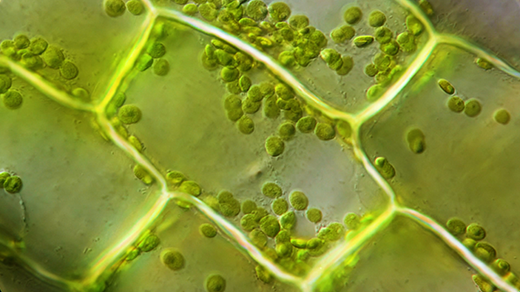
Sunlight is far from constant. From the soft dawn light to the intense midday sun, and from sudden shadows to direct exposure, plants must continually adjust. The primary danger comes from ultraviolet (UV) rays, which can damage DNA and degrade essential molecules. To survive, plants have evolved sophisticated repair mechanisms, such as photolyase enzymes that fix thymine dimers in DNA. However, these repairs come at an energy cost, making efficient light management crucial.
UV Damage and DNA Repair
UV radiation causes covalent bonds between adjacent thymine bases, creating lesions that disrupt replication and transcription. Plants employ photoreactivation, where blue light activates photolyase to split the dimers. This process is mathematically precise, relying on the exact wavelength and intensity of available light. Additionally, plants accumulate sunscreens like flavonoids and anthocyanins to filter harmful rays. The timing and quantity of these compounds follow a probabilistic model based on light history and predicted future exposure.
The Light-Harvesting Machinery
At the heart of photosynthesis are light-harvesting complexes (LHCs) that capture photons and transfer energy to reaction centers. These complexes are arranged in a highly ordered manner, often described as a two-dimensional antenna network. The efficiency of energy transfer depends on the precise spacing and orientation of pigments like chlorophyll and carotenoids. Remarkably, plants can rearrange these complexes in real time to respond to changing light levels, a process known as state transitions.
Quantum Coherence and Energy Transfer
Recent studies using ultrafast spectroscopy have revealed that energy transfer within LHCs involves quantum coherence—wave-like superposition of energy states. This allows excitons to explore multiple paths simultaneously, finding the most efficient route to the reaction center. The mathematics of this process can be modeled using the Schrodinger equation and density matrix formalism. Plants essentially perform a quantum computation of optimal energy transfer, adjusting for noise and disorder in the environment.
The Regulatory "Dance"
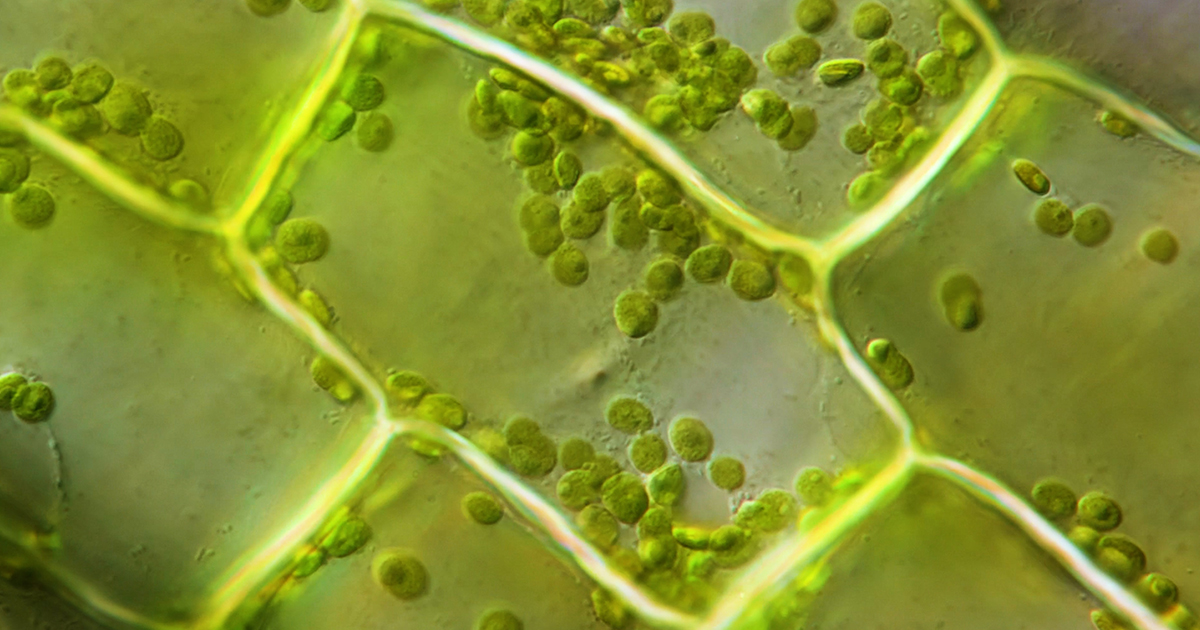
When light is too intense, plants must quickly dissipate excess energy to prevent oxidative damage. This is achieved through non-photochemical quenching (NPQ), a feedback loop that converts harmful energy into heat. The NPQ mechanism involves a pH gradient across the thylakoid membrane, which triggers conformational changes in proteins like PsbS. The speed and magnitude of NPQ are tuned by a mathematical threshold: only when light exceeds the capacity of photosynthesis does quenching activate.
Non-Photochemical Quenching Kinetics
The kinetics of NPQ follow a first-order differential equation, where the rate depends on the light intensity and the current state of the thylakoid lumen. Plants can switch between a low-quenching state (high efficiency) and a high-quenching state (protection) within seconds. This rapid response is modeled by a hysteresis loop, ensuring that plants do not overreact to brief fluctuations. The mathematical dance involves variables such as proton concentration, xanthophyll cycle pigments, and zeaxanthin levels.
Mathematical Modeling of Photosynthesis
Scientists use computational models to simulate the dynamic responses of plant cells to light. These models integrate multiple timescales—from femtosecond quantum events to minute-long state transitions. For instance, the Farquhar-von Caemmerer-Berry model predicts photosynthetic rate based on CO2 concentration, light, and temperature. More advanced models incorporate stochastic elements, such as the random arrival of photons and fluctuations in molecular states.
Adaptation Strategies
Plants also employ long-term adaptation, such as adjusting leaf orientation, chloroplast movement, and expression of light-harvesting genes. These strategies follow optimization algorithms akin to simulated annealing: plants gradually shift resources toward or away from light capture based on accumulated statistics. The result is a robust system that can handle both predictable and chaotic light patterns. Understanding this mathematical dance not only deepens our appreciation of plant biology but also inspires artificial photosynthesis and solar cell design.
Conclusion
The hidden mathematical dance inside plant cells is a testament to nature's ingenuity. From quantum coherence to feedback loops, plants have evolved a sophisticated toolkit to thrive on the edge of light's dangers. By studying these processes, scientists can develop more resilient crops and efficient renewable energy technologies. The next time you see a leaf bathed in sunlight, remember the complex calculations happening within—a silent, beautiful algorithm for life.
Related Articles
- Gaming Staff Drop New Weekly Roundup: Rare Fish, Paris Sim, and Relationship Puzzles Dominate
- Housemarque's Saros: A Roguelike That Doesn't Want to Be One – Why the Shift?
- Jace Beleren's Reality Fracture: Inside Magic: The Gathering's Next Universe-Shaking Set
- GameStop's $55.5 Billion Bid for eBay: A Bold Move with Many Questions
- Navigating the End of Xbox Copilot AI: A User’s Guide to What’s Next
- Invincible Vs: Datamining Reveals Hints at Unannounced Fighters
- Why Microsoft Abandoned Xbox Copilot: A Q&A Breakdown
- Dungeon Master Vibes: How Esoteric Ebb Brings Tabletop Chaos to Life