Mars Rover Curiosity's Drilling Challenge: How a Stubborn Rock Got Stuck and Broke Free
Introduction
NASA's Curiosity rover has been exploring the Martian surface for over a decade, but even seasoned explorers face unexpected hurdles. In late April 2026, the rover encountered an unusual problem while collecting a sample from a rock nicknamed "Atacama". After drilling into the rock, the entire specimen became lodged on the rover's robotic arm, forcing engineers to devise a clever solution over several days.
The Sticky Situation
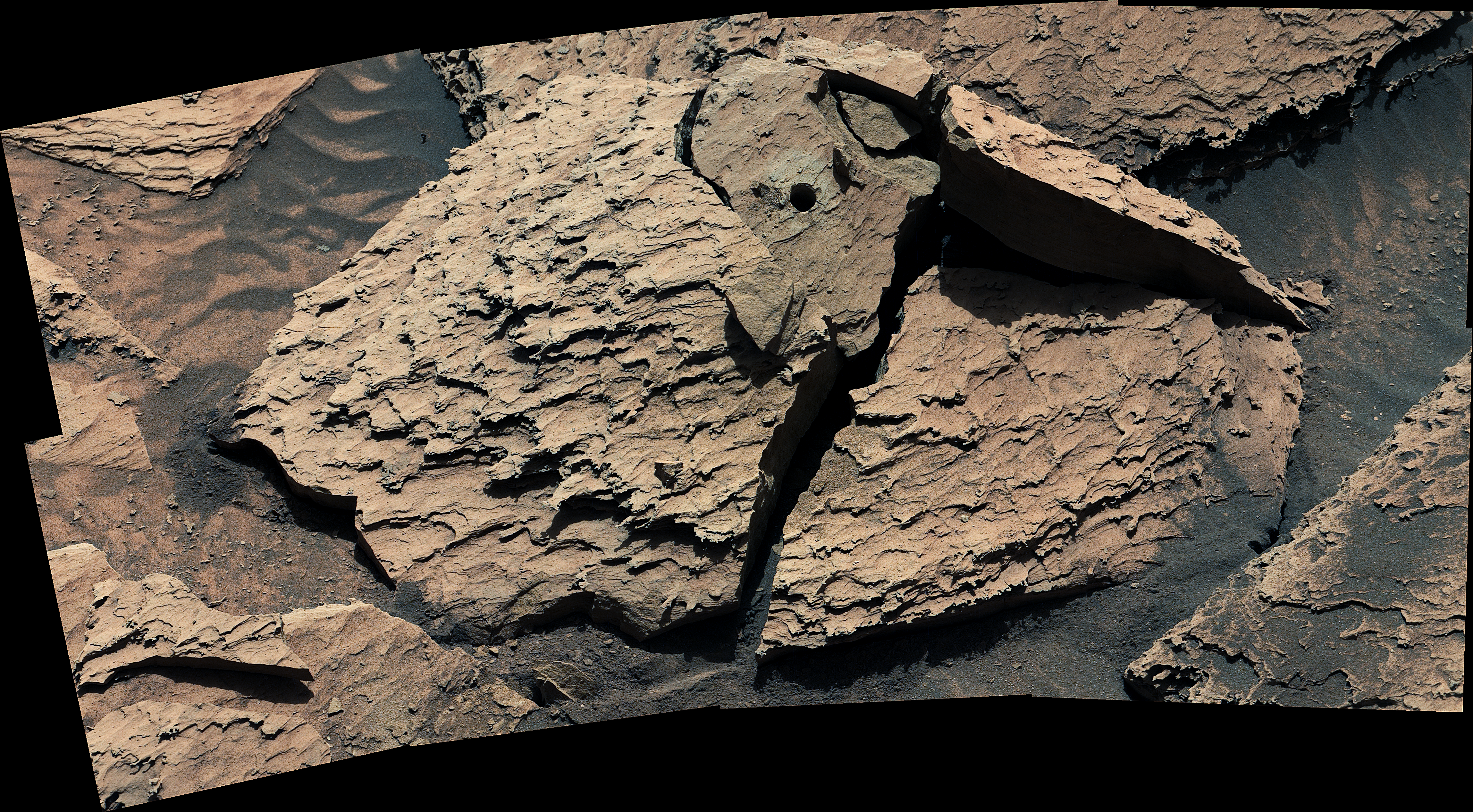
On April 25, 2026, Curiosity executed a routine drilling operation on a flat rock about 1.5 feet (45 centimeters) in diameter at its base and 6 inches (15 centimeters) thick. The drill created a circular hole to extract powdered rock for analysis. However, when the robotic arm retracted after drilling, it unexpectedly lifted the entire rock off the Martian ground — the rock remained firmly attached to the drill bit.
Engineers Respond
The team at NASA's Jet Propulsion Laboratory (JPL) immediately began troubleshooting. Over the following days, they commanded the rover to reposition the arm and activate the drill's percussion mechanism, which vibrates the bit to shake loose material. The goal was to dislodge the rock without damaging the instrument. After several attempts, the rock finally detached on May 1, breaking into multiple pieces as it fell to the surface.
A Closer Look at Atacama
Once the rock was free, Curiosity's Mast Camera (Mastcam) captured a detailed close-up image on May 6, revealing the drill hole and the rock's structure. Atacama is estimated to weigh about 28.6 pounds (13 kilograms) on Earth, though on Mars — with about one-third the gravity — it would feel like only about 9.5 pounds (4.3 kilograms). The rock's base is roughly the size of a large dinner plate, and its thickness resembles that of a thick textbook.
Note: The image also shows the circular hole created by the drill, a testament to the rover's precision engineering.
Why This Matters for Mars Science
While the incident caused a temporary delay, it highlights the unpredictable nature of planetary exploration. Rocks on Mars can have unexpected adhesion properties, possibly due to mineral coatings or electrostatic charges. Understanding these behaviors helps scientists improve future drilling strategies — both for Curiosity and for upcoming missions like the Mars Sample Return campaign.
The Atacama rock, named after the Chilean desert, adds to the growing catalog of Martian geological surprises. Each sample, even those that cause trouble, provides valuable data about the planet's history and composition.
Connecting to Curiosity's Broader Mission
Curiosity has been exploring Gale Crater since 2012, searching for evidence of ancient habitable environments. The rover's drill is one of its most important tools, allowing it to analyze the chemical and mineral makeup of rocks. While the Atacama incident was unusual, it is not the first time the drill has faced challenges. Previous drilling problems have included hard rocks that resisted penetration and mechanical faults that required creative workarounds.
Lessons Learned
Each obstacle provides engineers with practical experience. The Atacama event, for instance, demonstrated that the drill's vibration mechanism can be used not only for cutting but also as a tool to free stuck samples. Future rover designs might incorporate additional methods, such as a small ejector mechanism, to prevent rocks from adhering.
Visual Evidence
NASA has released the Mastcam image of Atacama, showing the rock after it separated from the drill. The image is part of a series that engineers used to assess the rock's shape and how it interacted with the drill. See the image of Atacama stuck on the drill for a before-and-after perspective.
Conclusion
The incident with the Atacama rock serves as a reminder that even routine tasks on Mars can turn into engineering puzzles. Curiosity continues to operate normally, and the sample collected from the rock (or from nearby debris) will eventually be analyzed. For now, the rover rolls on, ready for the next surprise the Red Planet throws its way.
Further Reading
Related Articles
- New artificial intelligence technique integrates scattered cellular maps into comprehensive spatial atlases across multiple tissues
- 8 Things You Need to Know About the Revolutionary Space Radiation Shield That's Thinner Than Hair
- Orbital AI Data Centers: A Comprehensive Guide to Launching Edge Computing in Space
- Unraveling Lightning's Mysteries: From Solar Flares to Runaway Electrons
- How Early Humans Mastered the Container: A Prehistoric DIY Guide
- LAGEOS: The Laser Geodynamics Satellite That Revolutionized Earth Science
- 10 Incredible Revelations from the Cambrian Fossil Bonanza That Rewrite Early Life
- 10 Breakthroughs in Cryogenic Fuel Technology for Deep Space Exploration